Devinci Spartan Well-rounded but ready to brawl.
There’s a new Devinci Spartan in town, and if you’ve been paying attention to the brand’s e-bike lineup, the suspension layout and colorway shouldn’t be a surprise, since they both appeared on the E-Spartan which debuted last summer.
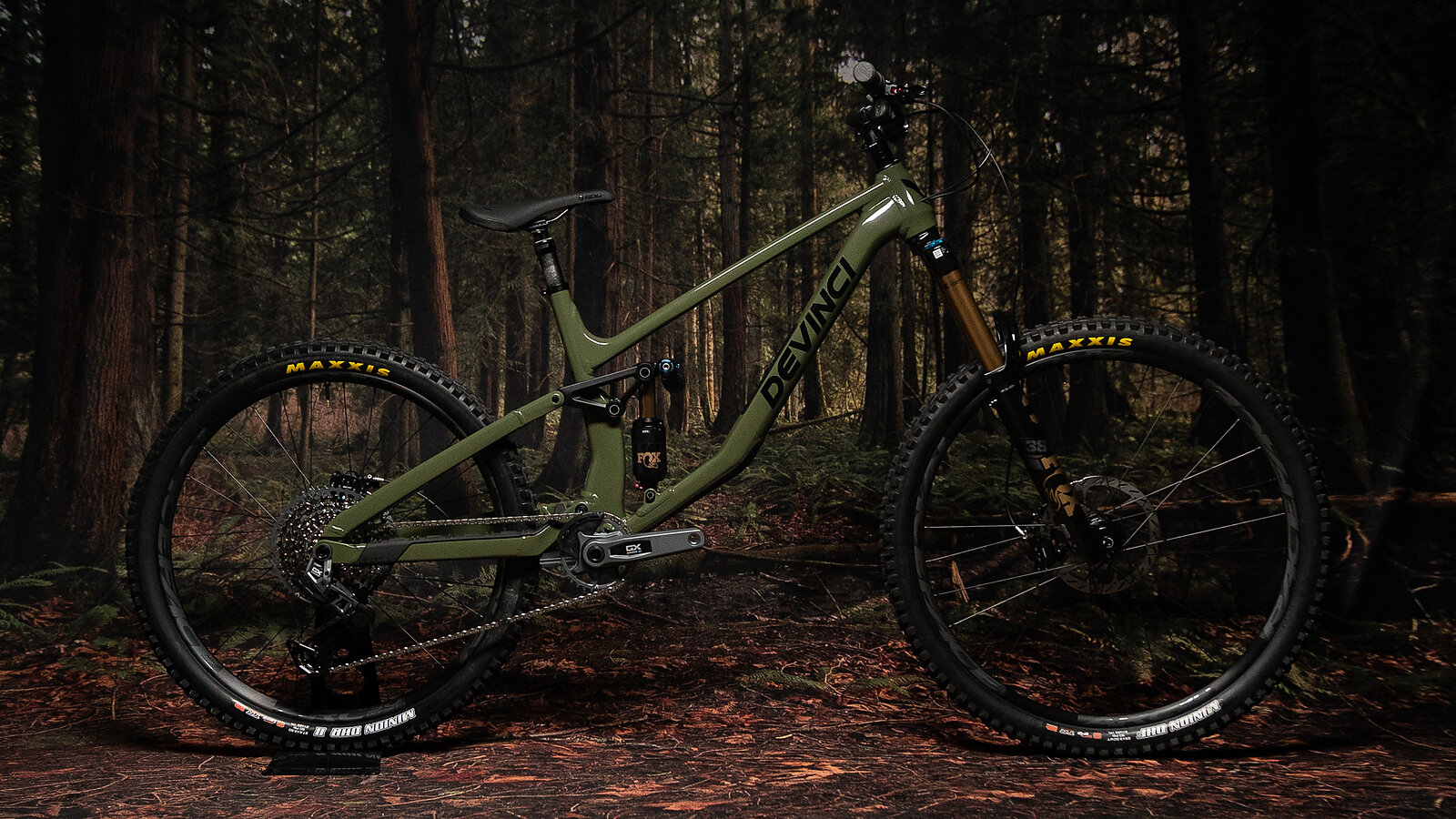
The Spartan is no longer an exotic-looking, carbon, high-pivot rig. Instead, it’s a sensible, made-in-Canada, aluminum whip that shares a lot of design language with Devinci’s Troy. I will admit to a hint of disappointment when I unboxed the new Spartan and found it to be so “normal” looking but, in the weeks since, this bike has really grown on me, to the point where I think it’s one of the more well-rounded enduro rigs I’ve been on recently.
Devinci Spartan Details
- Travel: 165 mm (rear) 170 mm (front)
- Wheel Size: Mixed or full 29”
- Size Tested: Large
- Build Tested: GX AXS
- Head Tube Angle: 63.5/63°
- Measured weight: 38.06 lbs, 17.26 kg
- MSRP: $5,999
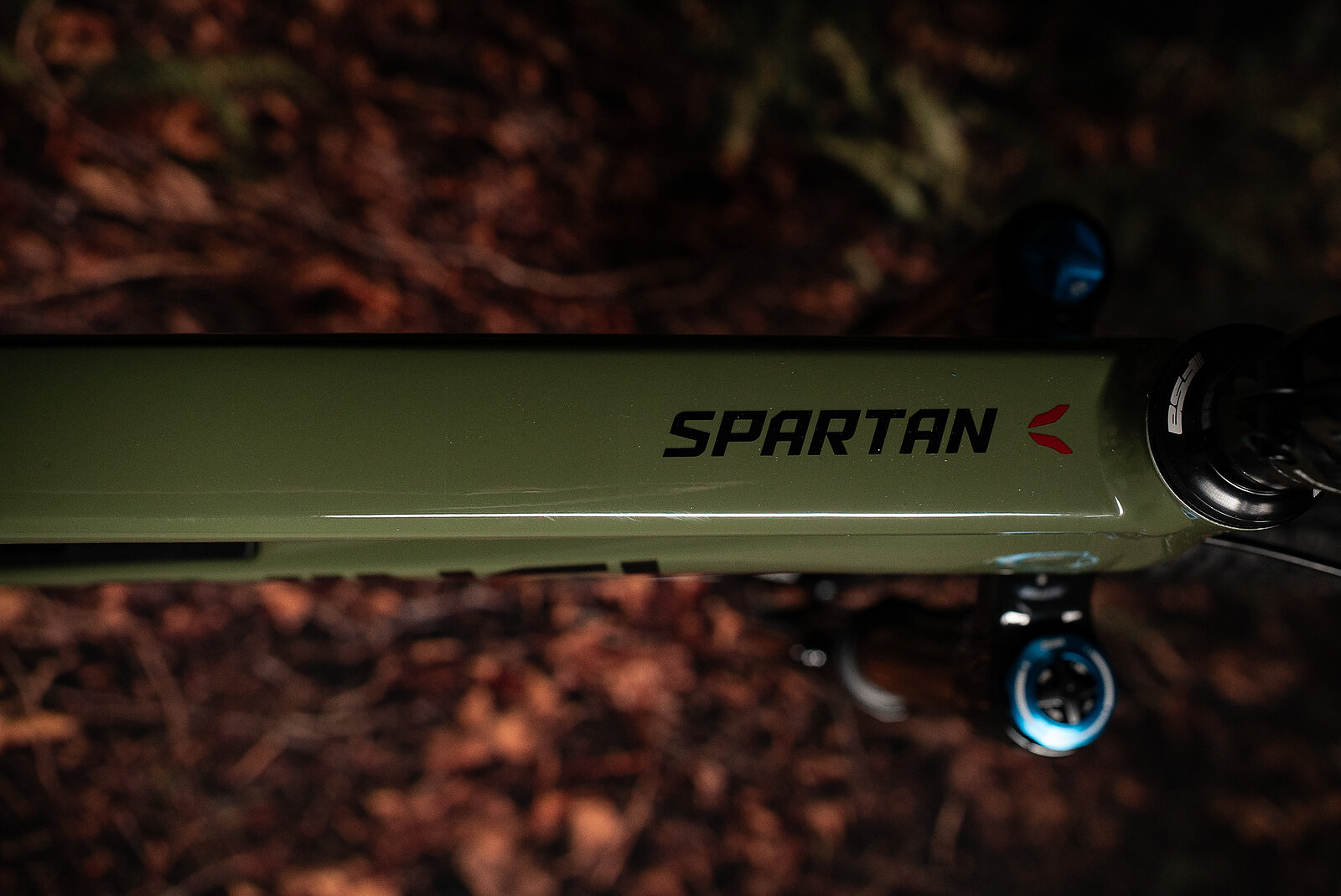
What’s New With the Spartan?
The last generation Spartan debuted in 2021, and is a pretty radically different looking bike from the new version. It was only available in carbon fiber, used a high pivot suspension system, and had a fairly steep (64.5/65°) head tube angle. It also used a SuperBoost rear end, didn’t have in-frame storage, and was optimized for two 29” wheels. The new Spartan is much slacker, with thoroughly modern geometry, is only available in made-in-Canada aluminum, uses a 148-millimeter UDH rear end, has the same SHED storage as the Troy, and has a flip-chip for mullet for full 29” setups.
If you placed the two generations next to each other, I’m not sure you’d see much visually shared DNA. Instead, the new Spartan looks much more like a bigger Troy. But there’s more to this frame than meets the eye at first glance.
Devinci Spartan Frame Details
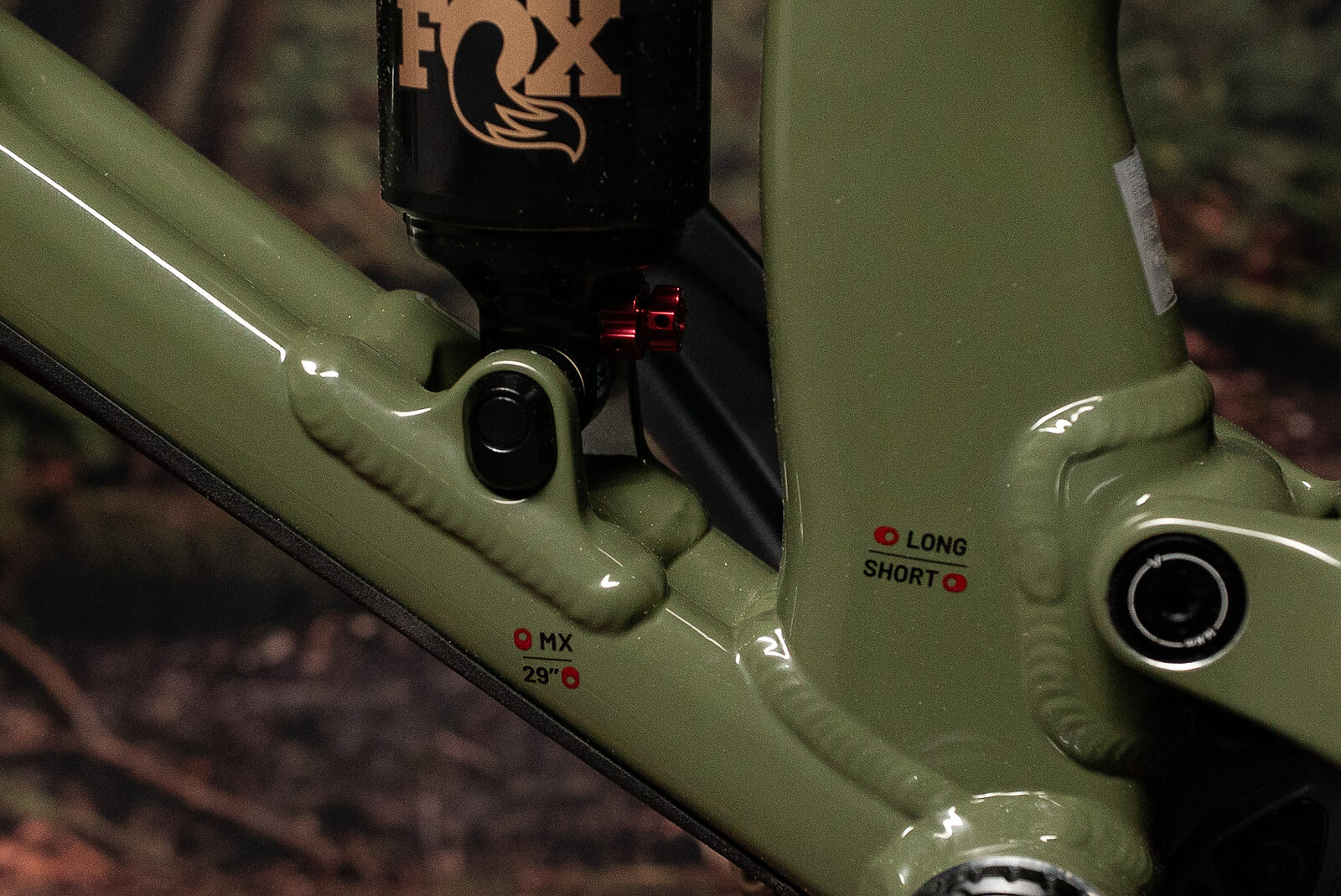
I’m a big fan of Devinci’s current aluminum bikes. The brand has figured out a clean, no-nonsense approach to features and styling that really speaks to me. The Spartan uses Dave Weagle’s Split Pivot suspension system, with a pivot at the rear axle. There are two flip chips, one at the chainstay, which gives 7 millimeters of length adjustment (while also slackening out the head tube angle by .5° and dropping the reach by 5 millimeters) and another at the lower shock mount, which compensates for a 29” or 27.5” rear wheel while maintaining geometry.
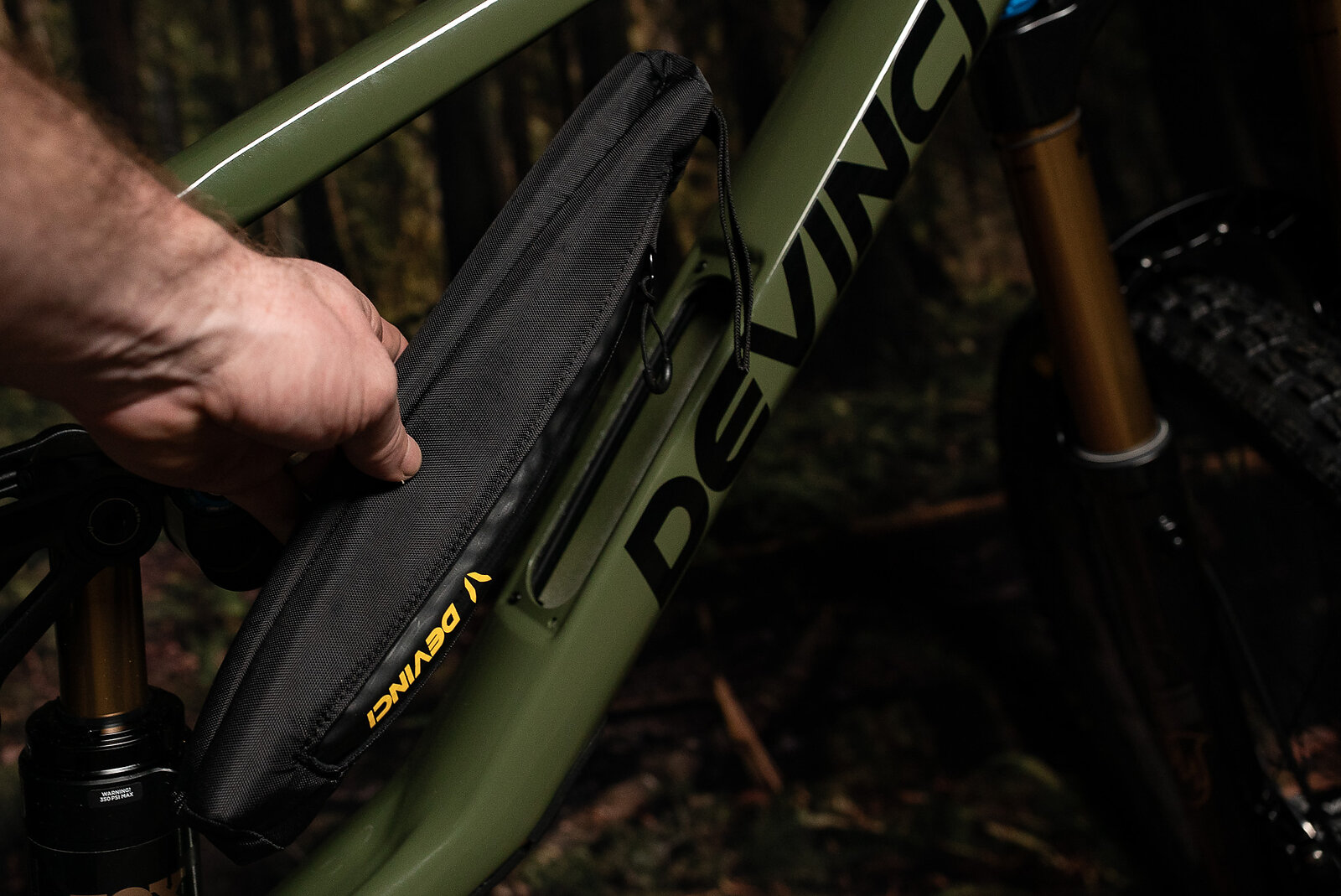
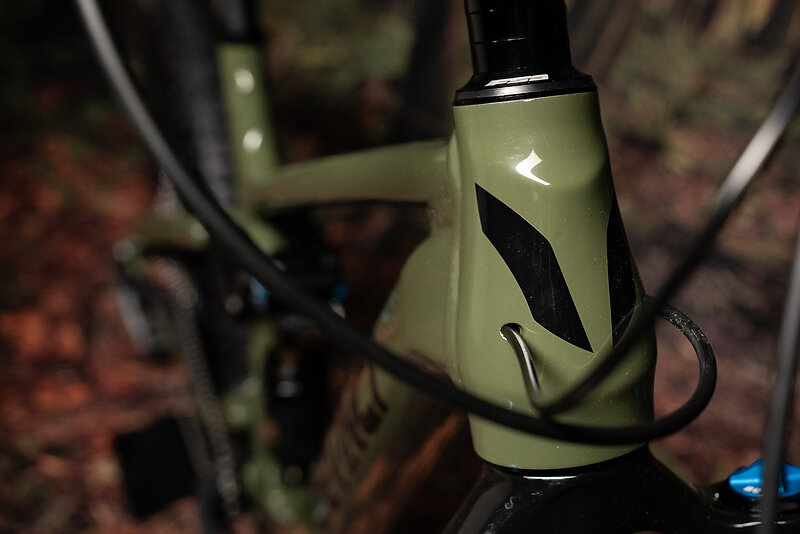
Devinci’s SHED in-frame storage solution doesn’t have the largest door or internal storage volume, but it does work well, and has stayed tight and quiet on the two bikes I’ve ridden with it. All the Spartan’s cables are routed and guided internally, and it uses fairly normal standards with a threaded bottom bracket, 31.6-millimeter seat tube (with generous insertion depth), ISCG tabs for a bashguard, and rubber guards on the downtube and chainstay.
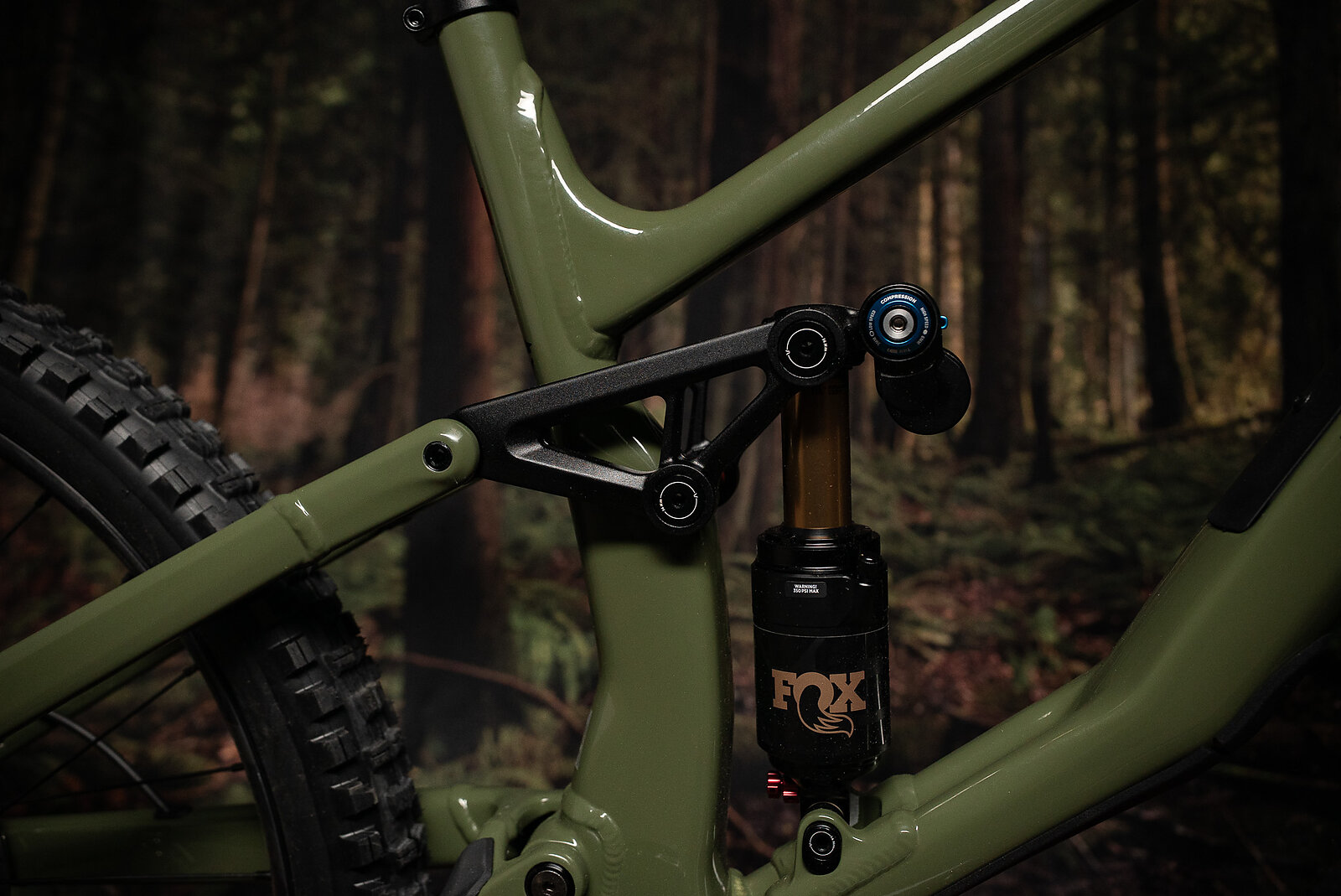
The Spartan’s leverage ratio changes from 3.1 to 1.9 through the stroke, and Devinci says it will work well with both coil and air shocks.
Devinci Spartan Geometry
The previous Spartan wasn’t terribly progressive five years ago, so it’s no surprise that the new one gets a slacker head tube (63 or 63.5°) steeper seat tube (77.6/78°), taller stack (640/644 mm on a size large) and size-specific chainstays.
At 6’2” I got along really well with the Spartan’s 480-millimeter reach. I’m also a big fan of that steeper seat tube, it puts me in a really comfortable pedaling position. Similarly, the head tube angle is right on the money for a bike with the Spartan’s intentions, and, as I’ll get into later, I appreciated the slightly longer 450/457- millimeter chainstays.
Devinci Spartan Build
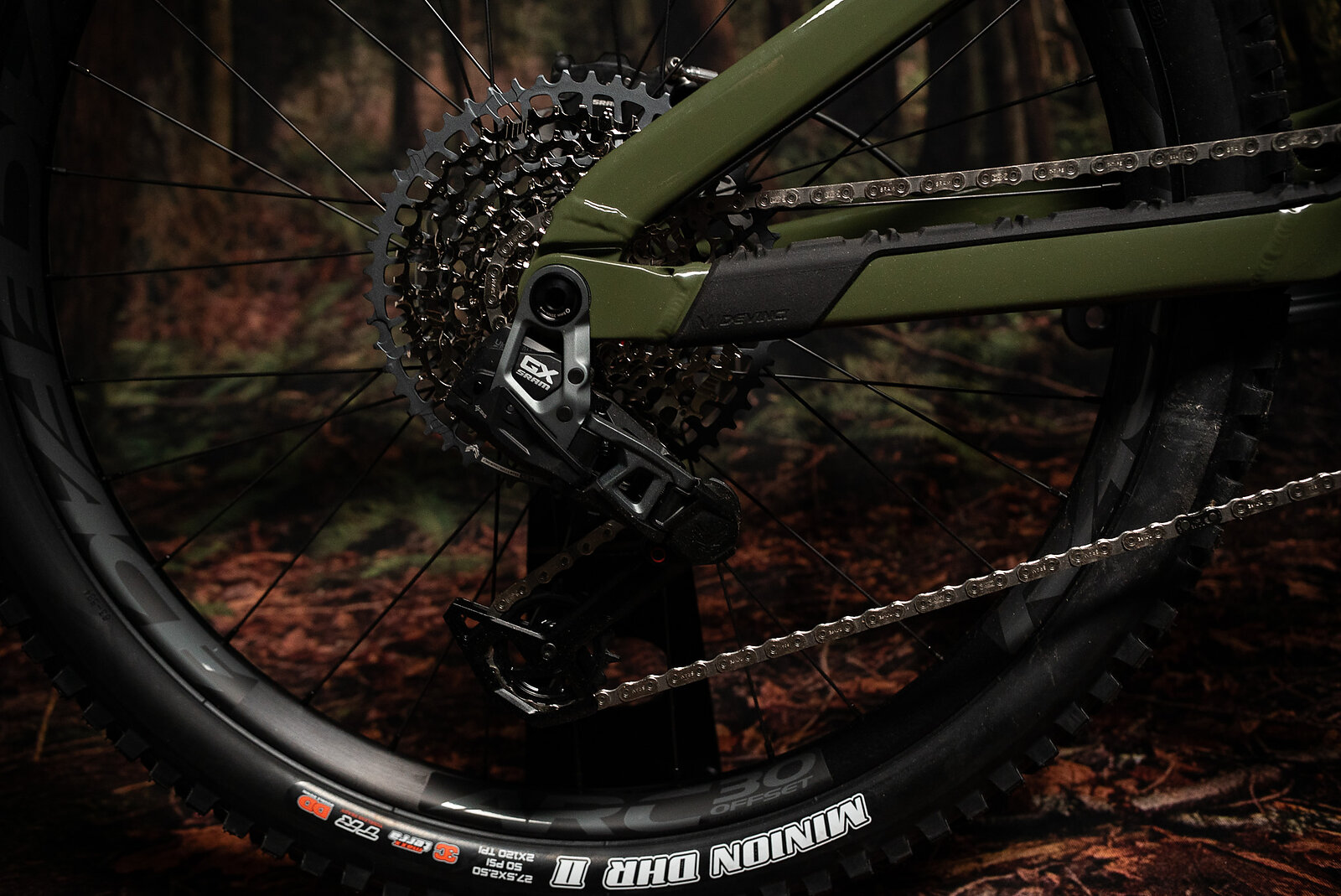
I tested the highest-end Spartan that Devinci sells, the GX AXS version, which, unsurprisingly, revolves around SRAM’s GX Transmission drivetrain. Out of the box, this build is well-suited to the Spartan’s intentions.
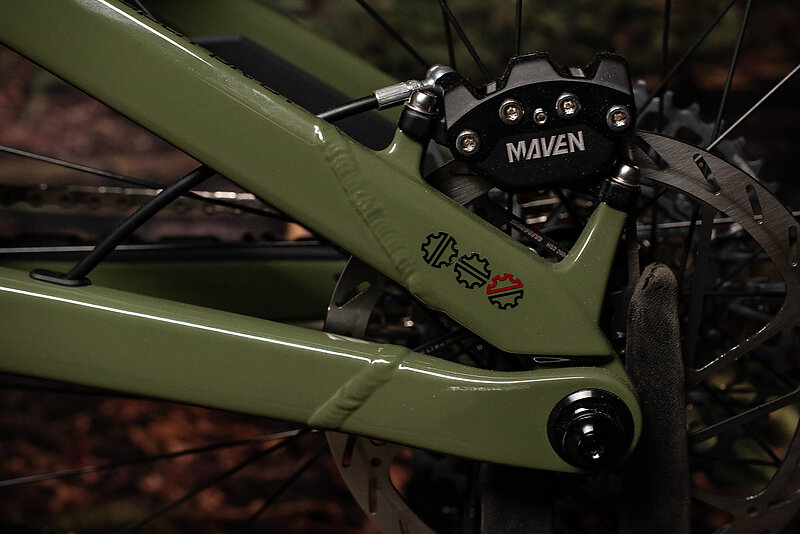
The previous model SRAM Maven Silver A1 brakes handle stopping duties on the Spartan, and I think I prefer their lever feel to the new B1 by a small margin. Fox covers the suspension with a Factory 38 up front, and a Float X2 in the rear. My review bike came with the previous generation 38, but consumer bikes will come with the new 38 that was just announced. The old 38 was an excellent match for this bike, and I’m stoked to get on the new one. The RaceFace ARC 30 wheels come stock with DoubleDown Maxxis Minions—DHF MaxxGrip up front, and DRHII MaxxTerra in the rear. It’s awesome to see this bike come with real tires from the factory.
For the price point, this is one of the more dialed builds I’ve seen. I did make a few small changes. After a few rides I swapped out the stock 40-millimeter bars for 50s. The RaceFace 40-millimeter rise bars feel lower than their stated height, and bikes like the Spartan are exactly why I asked OneUp for an extra set of 50 millimeter bars. I really appreciated the added height and confidence. I also swapped out the stock 200-millimeter SDG Tellis V2 for a 240-millimeter Fox Transfer. The Tellis V2 is an absolutely adequate dropper, and 200 millimeters is a totally reasonable spec, but I can easily fit a 240, so why not? Finally, I swapped out the DHF for a High Roller III. It’s wet and loose in Bellingham in the spring, and I prefer the High Roller in those conditions.
Riding the Devinci Spartan
I started out with the Spartan in its stock setup: mullet wheels, short chainstay, stock bars. And it was fine. Good even. It’s an efficient bike headed up the hill, and does a good job of maintaining speed on rolling trails. It's nice and supportive and allows you to pump through things that other bikes in this class tend to mute or erase. The rear end of the Spartan does a really good job of balancing sensitivity and support, muting the small chatter, without feeling at all ponderous or wallowy. In its stock form, I quite enjoyed the Spartan on the techier trails of Bellingham's Galbraith network.
But on steeper descents, I didn’t quite feel like I was gelling with the Spartan. The front end felt low, and the bike felt a little racier than I would like. That’s not really a surprise, this is an enduro race bike after all, but I felt like there was more potential here to unlock. So I started experimenting, and that’s where I fell in love with the Spartan.
I started out with the higher rise bar. This made a bigger difference than I expected. I felt more centered on the bike instead of being pulled over the front. That’s not a knock on the Spartan’s stock geo at all, not everyone wants as tall of a front end as I do, so it doesn’t make sense to make the head tube much longer. But, what really unlocked the Spartan’s magic, for me at least, was bumping the chainstay out to the longer 457-millimeter position.
In the grand scheme of things, 457 millimeters isn’t that long, but it’s a fair bit longer than most of the bikes I’ve been riding recently, and, combined with the slight bump in stack that change gives, made the bike feel even more stable and balanced, without hurting its maneuverability too much. It puts me in a really strong position in the bike, where I feel comfortable on the steepest, most technical trails around, without feeling out of place on mellower rides. I especially noticed those longer stays on beat up runouts and shutdown turns coming out of rock rolls and chutes. They help the bike stay composed and comfortable, instead of the more hectic experience I’m used to.
It feels like there’s always a discussion raging on the internet about how to differentiate between the various classes of long-travel pedal bikes. What’s the line between an enduro bike and a freeride whip? The Spartan helped me solidify my personal definition of that distinction. To me, enduro bikes are bigger trail bikes, and freeride bikes are smaller downhill bikes. Devinci makes room in its lineup for both. The Chainsaw is unabashedly a downhill-ready pedal bike, made for the biggest stunts and moves around. And the Spartan is a longer-traveled Troy. Yeah, it can handle its share of big moves and gnarly trails, but it pedals really well, and it descends quickly and efficiently. No, it doesn’t generate as much traction and confidence as something like the Trek Slash, but it’s also a lot more efficient over long days, and faster on mellower trails than the Slash will ever be.
The Spartan is the rare bike that can absolutely handle the steepest, gnarliest trails I’ve ridden, while also feeling fun and inoffensive on mellower rides. That means that if I could only own one bike here in Bellingham, it would be high on the list. There are not many bikes that I’d be happy shuttling with one day, and then riding mellow Galby trails on the next, but the Spartan gets as close to striking that balance as any bike I’ve ridden.
The bike I found myself most thinking about while riding the Spartan was the current Pivot Firebird. Both bikes prioritized efficiency over all-out traction, and both are prime contenders in the “big bike that you’re happy pedaling all day” class. But, I think the Spartan beats out the Firebird when it comes to capability in bigger terrain. It feels more composed and comfortable when the trail gets gross, and is a little more easy-going as opposed to the more taut and sharp feeling Firebird.
For Now
At first glance, the new Devinci Spartan looks unassuming, like a slightly bigger Troy. But that belies its capability. It’s an incredibly well-rounded bike that’s happy to crank out big days, or seek out trails that scare you.
Learn more: Devinci Bikes